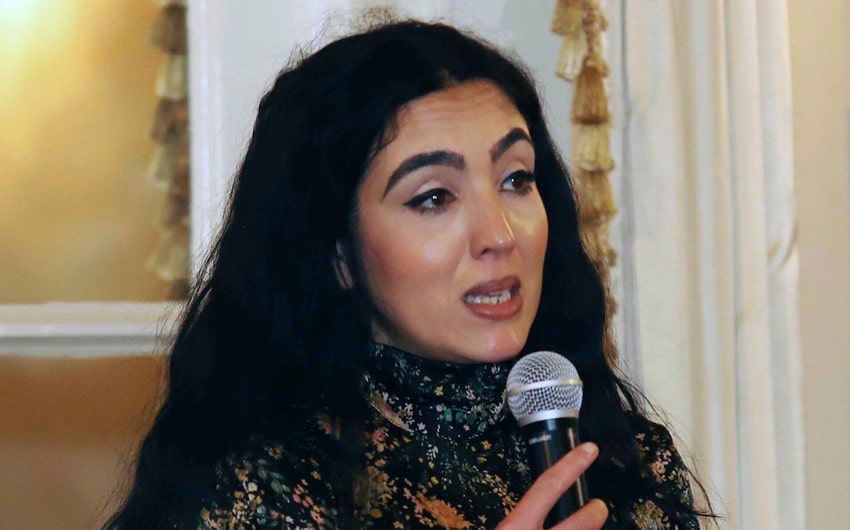
When people hear the name Gisele Barreto Fetterman, they often picture “a politician’s wife,” then stop there. But her story doesn’t fit neatly inside that label. She’s an immigrant who once lived in the shadows, a community organizer who built practical solutions out of almost nothing, and a public advocate who’s managed to stay direct and human while the spotlight got brighter.
From Rio to Queens: the beginning of her American story
Gisele Barreto Fetterman was born in Rio de Janeiro, Brazil, and came to the United States as a child with her mother and younger brother. They arrived without legal status and settled into a small, one-room apartment in New York City. It’s the kind of detail that matters, because it sets up the theme that runs through nearly everything she’s done since: when you’ve lived a life where basics are uncertain, you develop a radar for what families actually need.
She has spoken about the fear and instability that pushed her family to leave Brazil, and about the shock of starting over in a new country without English, without money, and without the safety net many people assume exists. In her telling, the family relied on food banks and thrift stores and made a home with whatever they could find. Her mother, highly educated in Brazil, took cleaning jobs in the U.S. just to keep the household afloat.
Those years weren’t simply “hard.” They were formative. They taught her that dignity isn’t a luxury. It’s a requirement. And if dignity is missing, the first thing you do is rebuild it.
How her past shaped her focus: access, equity, and everyday survival
If you want to understand Gisele’s work, it helps to think less about politics and more about logistics. Her activism has never been about abstract slogans. It’s about the stuff that makes a household function: food, clothes, diapers, transportation, and the quiet relief of knowing you can get what you need without being judged.
That approach makes sense for someone who spent years as an undocumented immigrant. When your family’s status is uncertain, you learn quickly that “simple errands” can feel risky, paperwork can feel terrifying, and asking for help can feel like exposing yourself. Her advocacy often circles back to that emotional reality—because policy isn’t theoretical when you’ve lived it.
Why Braddock became the center of her life’s work
Braddock, Pennsylvania, is a small borough outside Pittsburgh with a history shaped by industry and the painful aftermath that came when industry left. It’s also the place where Gisele’s public story becomes very practical. Instead of building a resume made of panels and speeches, she built projects that answered real needs in the community around her.
Over time, Braddock became the proving ground for her main idea: if you can create a model that works in a place with limited resources, you can adapt it almost anywhere. That’s why her initiatives have been copied, expanded, and studied far beyond the town’s size.
The Free Store 15104: radical kindness with a simple blueprint
The project most associated with Gisele Barreto Fetterman is the Free Store 15104 (also described as the Braddock Free Store). The concept is disarmingly simple: instead of throwing usable goods away, collect them and let neighbors “shop” for free.
But the simplicity is the genius. Families can get clothing, household items, baby supplies, and essentials without cash changing hands—and without the emotional weight that sometimes comes with traditional charity models. It’s not “prove you’re struggling, then maybe you qualify.” It’s “take what you need, leave what you can, and you’re still respected either way.”
In practice, the Free Store became more than a place. It became a community signal. It told residents, “You don’t have to be embarrassed to need help.” It told donors, “Your surplus has value.” And it told other communities, “You can build a dignified system without a fancy building or endless funding.”
Over the years, the Free Store has served large numbers of families each month and inspired additional locations and spinoff efforts. That growth matters because it shows something important: when a solution is both humane and efficient, it spreads.
412 Food Rescue: fighting hunger by solving food waste
Food insecurity is a strange American contradiction. We have massive food waste and, at the same time, families who can’t reliably access meals. Gisele co-founded 412 Food Rescue to tackle that contradiction with a practical fix: move surplus food to people who can use it, quickly.
Instead of treating hunger like an unsolvable tragedy, the model treats it like a coordination problem. Grocery stores and retailers often have edible food that won’t sell in time. Nonprofits and community organizations can distribute food but may not have consistent supply. Volunteers can bridge the gap if there’s a system that makes it easy.
That’s where the organization’s structure matters. It isn’t just “good intentions.” It’s logistics, timing, and community participation—neighbors helping neighbors, but in a way that actually scales.
For Good PGH and The Hollander Project: building opportunity, not just relief
Relief matters, but long-term stability requires opportunity. That’s where For Good PGH enters the picture. The organization focuses on inclusion and community-driven projects, and it brought Free Store 15104 under its umbrella.
One of the most talked-about initiatives connected to that work is The Hollander Project, which supports women entrepreneurs through incubator-style programming. It’s a different kind of help than a clothing drive, but it fits the same philosophy: give people tools and access, not pity.
The larger message is subtle but powerful. If you want to change outcomes for families, you can’t only hand out necessities (as important as that is). You also create pathways—ways for people to earn, build, and lead in their own communities.
Her time as Second Lady of Pennsylvania
When John Fetterman served as lieutenant governor, Gisele took on the public role of Second Lady of Pennsylvania. Even then, she maintained a style that felt more community-organizer than political spouse.
She showed up at events with the same core interests she’d had before: access to resources, compassion toward immigrants, and practical ways to reduce harm. She also leaned into a kind of plainspoken authenticity that made her stand out in a world where public figures often sound carefully sanded down.
Rather than treating the role as a ceremonial title, she used the attention it brought to highlight needs that already existed—food insecurity, poverty, and the gap between what communities face and what people in power often see.
Advocacy positions that consistently show up in her public voice
Gisele Barreto Fetterman’s advocacy has touched a wide range of issues, but a few themes appear again and again:
- Immigration with compassion: She’s pushed for humane approaches and has spoken against separating families, often drawing on her own experience of living undocumented.
- Dignity-first community support: Her projects aren’t designed to “police” need. They’re designed to meet it.
- Inclusion and belonging: She has supported initiatives meant to normalize difference and reduce fear of “the other.”
- Criminal justice and harm reduction: Her public comments have often emphasized solutions that reduce suffering rather than simply punish.
You don’t have to agree with every stance to recognize the pattern: she advocates from lived experience, and she tends to choose the most human framing available—especially when the conversation turns cold or judgmental.
Her public style: thrift, sustainability, and making “ordinary” visible
Another reason people gravitate toward her is that she doesn’t perform wealth. She’s been widely covered for wearing thrifted outfits at high-profile political moments, treating it less like a stunt and more like a normal extension of her values.
That choice connects directly to her personal history. When you’ve grown up relying on thrift stores, you don’t automatically see secondhand clothing as “less than.” You see it as practical, resourceful, and often smarter than buying new.
In a culture that constantly sells “new” as the default, her public fashion choices quietly challenge the idea that respectability has a price tag.
Becoming a trained firefighter: the kind of headline that actually fits her
In a way, it’s the most Gisele thing ever: while people debate her public image online, she’s out doing something concrete. Reports in recent years noted that she trained and became a firefighter—another example of choosing service that’s direct and physical, not symbolic.
It also matches her overall pattern. She doesn’t only advocate from a microphone. She tends to step into work that requires commitment, discipline, and real time—whether that’s running a Free Store, building rescue logistics for food, or learning skills that help in emergencies.
Family life and partnership, without turning it into a brand
Gisele is married to John Fetterman, and together they have three children. Their relationship has received attention because it doesn’t look staged. It looks like a partnership built around shared values and the messy reality of daily life.
She met John after reaching out with questions about Braddock and its revitalization efforts, which is a very “her” origin story—curiosity first, action second. Over time, they built a family in the same place where she was building community projects, which speaks to an unusual level of consistency. Many people talk about “staying close to the community.” Fewer people actually plant themselves there and keep showing up year after year.
Why her story resonates beyond politics
It’s tempting to file her away as “a senator’s spouse,” but that framing misses what people actually connect with. Her story resonates because it’s about transformation without forgetting where you came from.
She didn’t build her identity around being rescued by America. She built it around participating in America—challenging it, improving it, and insisting that the people most likely to be ignored deserve comfort and respect.
And maybe that’s the best way to describe her impact: she has taken experiences that could have produced fear or bitterness and turned them into systems that make life easier for other people. It’s not glamorous work. It’s the kind of work that makes a community feel like a community again.
If you only knew the name Gisele Barreto Fetterman because of politics, her nonprofit work and immigrant story explain why she’s become a public figure in her own right: she’s built a reputation on practical compassion—and she keeps choosing action over image.
image source: https://www.nytimes.com/2020/10/15/us/gisele-fetterman-racial-slur.html