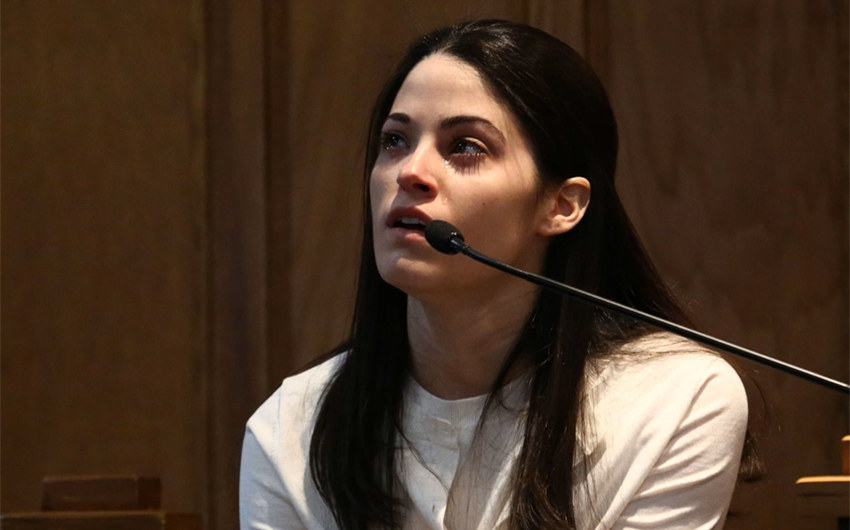
When people search for Nikki Addimando’s husband, they are usually trying to understand the man at the center of one of the most widely discussed criminal cases in recent years. Nikki Addimando became nationally known after she was convicted of killing her partner, Christopher Grover, a case that sparked intense debate about domestic violence, self-defense, and how the justice system treats survivors of long-term abuse. While Christopher Grover was not legally her husband, he was her long-term partner and the father of her children, which is why he is often referred to that way in public discussion.
Who Is Nikki Addimando?
Nikki Addimando, whose full name is Nicole Addimando, lived in the Hudson Valley region of New York. She became a public figure not by choice, but because of a criminal case that raised difficult and uncomfortable questions about how abuse is understood in courtrooms.
Before the case, Addimando was not well known outside her community. She was a mother of two children and lived with her partner, Christopher Grover. After Grover’s death in 2017, Addimando was arrested, charged, and eventually convicted of second-degree murder, a verdict that brought widespread attention to her story.
What made the case especially notable was Addimando’s claim that she had been subjected to years of physical and sexual abuse. Supporters argued that the justice system failed to account for the realities of long-term domestic violence, while others focused on the legal standards required for self-defense.
Who Was Nikki Addimando’s Husband?
Christopher Grover is the person most people mean when they refer to Nikki Addimando’s husband, even though court records describe him as her partner rather than her legal spouse. The two were in a long-term relationship and shared two children together.
Grover was known in his community as a gymnastics coach and father. Friends and family members described him as caring and dedicated, which contributed to the deep division in public opinion after his death. For some, this public image conflicted sharply with the abuse allegations raised during the trial.
It is important to note that, as with many domestic violence cases, the public narratives surrounding Grover were complex and often contradictory. The prosecution and the defense presented very different versions of who he was and what the relationship was like behind closed doors.
Nikki Addimando and Christopher Grover’s Relationship
According to court records, Nikki Addimando and Christopher Grover began their relationship around 2009 and later lived together with their children. From the outside, they appeared to be a family unit, but Addimando later testified that the relationship was marked by control, fear, and repeated abuse.
Addimando stated that she endured years of physical and sexual violence, claiming that Grover used intimidation and threats to keep her from leaving. She also said that the abuse escalated over time and that she felt trapped, both emotionally and practically, because of their shared children and living situation.
Grover’s family strongly disputed these claims, and prosecutors argued that Addimando had opportunities to leave the relationship safely. This clash of narratives became central to the case and highlighted how difficult it can be for courts to assess abuse that occurs over long periods rather than in isolated incidents.
Allegations of Domestic Abuse
One of the reasons this case continues to be discussed is how it exposed gaps between lived experiences of abuse and legal definitions of self-defense.
Addimando presented evidence during the trial that she said supported her claims of abuse, including photographs of injuries. Advocates for domestic violence survivors emphasized that victims often do not report abuse immediately, due to fear, shame, financial dependence, or concern for their children.
The prosecution, however, focused on the legal requirement that self-defense involves an immediate and unavoidable threat. They argued that, regardless of past abuse, the circumstances at the exact moment of the shooting did not meet that standard.
This tension between legal theory and real-world dynamics became one of the defining aspects of the case.
The Incident That Led to Christopher Grover’s Death
Christopher Grover died on September 27, 2017, after being shot at close range in the home he shared with Addimando. Addimando admitted to firing the gun but said she acted out of fear for her life.
Prosecutors argued that Grover was not posing an immediate threat at the moment he was shot. The defense countered that years of abuse made the threat feel constant and unavoidable, even if it was not actively unfolding in that instant.
These differing interpretations were critical to the jury’s decision and later to appellate review. The case demonstrated how difficult it can be to apply rigid legal standards to situations shaped by long-term trauma.
Legal Case and Court Outcome
In 2019, Nikki Addimando was convicted of second-degree murder and weapons possession. She was initially sentenced to 19 years to life in prison, a sentence that shocked many advocates for domestic violence survivors.
Her case later became closely tied to New York’s Domestic Violence Survivors Justice Act, a law designed to allow judges to impose reduced sentences when abuse significantly contributes to a crime. After appeals, Addimando’s sentence was reduced to seven and a half years.
In January 2024, she was released from prison after serving time under the revised sentence. Her release renewed public discussion about whether the original conviction and sentence reflected justice or a failure to account for abuse.
Public Reaction and Broader Impact
The case of Nikki Addimando and her husband-like partner Christopher Grover remains a reference point in discussions about domestic violence, self-defense, and criminal law. Supporters argue that it exposed how survivors can be punished for actions taken after years of coercion and fear. Critics maintain that the rule of law must apply consistently, regardless of personal history.
What is undeniable is that the case forced courts, lawmakers, and the public to confront uncomfortable questions. How should the law define “imminent danger” in abusive relationships? What responsibility does the justice system have to understand trauma? And how should accountability and compassion coexist?
Featured Image Source: abcnews.go.com