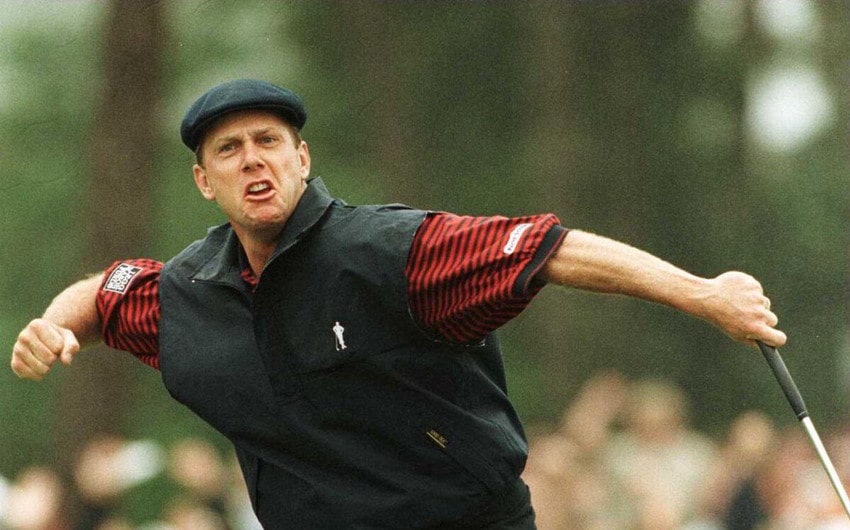
If you’ve been searching for Payne Stewart wife, you’re probably trying to understand the woman who stood beside one of golf’s most unforgettable personalities—and how she carried their family forward after the world changed overnight. Payne Stewart’s wife, Tracey Stewart, lived the part most fans never see: the travel, the pressure, the public attention, and the private sacrifices that come with a life built around elite competition. Her story isn’t about fame. It’s about steadiness.
Who was Payne Stewart’s wife?
Payne Stewart was married to Tracey Stewart. While Payne became famous for his sharp game, bigger-than-life style, and signature knickers, Tracey was known for something quieter: being a consistent anchor in a lifestyle that rarely stays still.
Golf is often portrayed as calm and polished, but professional golf families know a different reality. Weeks on the road. Long practice days. High-stakes Sundays. Pressure that can follow an athlete right into dinner. A spouse in that world becomes part partner, part home base, part emotional support system. Tracey’s role mattered because it helped keep life normal when nothing else was.
How their relationship fit Payne Stewart’s larger-than-life public image
To the public, Payne Stewart could feel like a character in the best way: bold outfits, bright confidence, a presence that made you look up even if you didn’t follow golf closely. But a public image like that usually has a private counterbalance. For many high-profile athletes, the relationship works best when one person can hold the center steady while the other lives in motion.
Tracey wasn’t trying to compete with his spotlight. She didn’t need to. Her strength showed up in stability—something that doesn’t make headlines, but makes a family work.
Marriage in a touring life: what it really demands
Being married to a touring pro isn’t glamorous in the way people imagine. Yes, there are beautiful locations. Yes, there are big moments. But the day-to-day is built on logistics.
- Travel routines: airports, hotels, rental cars, time zones, and constant packing.
- Emotional swings: a great finish can lift a whole week; a bad weekend can linger.
- Public scrutiny: fans, media, sponsors, and the quiet pressure to look “fine.”
- Family planning: raising children while one parent’s calendar is never typical.
A marriage can’t survive that environment on romance alone. It needs communication, patience, and a shared understanding that work seasons will sometimes feel heavy. Tracey and Payne built a family inside that reality, not outside it.
Tracey Stewart as a mother and the center of the home
Payne and Tracey had children together, and that’s often where Tracey’s influence becomes most visible. When a family lives around professional sports, children can easily feel like they live around the schedule, too. The parent who creates normal rhythms—school routines, home traditions, simple steadiness—ends up shaping the entire emotional temperature of the household.
Tracey’s public image has never been “celebrity spouse.” It has been “mother, wife, and keeper of the family story.” And after 1999, that role became even more central.
The 1999 tragedy and what it changed
Payne Stewart’s death in 1999 shocked the sports world. Fans remember the headlines, the mourning, and the suddenness of it. But for Tracey, it wasn’t a public tragedy first. It was a private one.
When a loss happens in a public way, it creates a strange split: the world grieves the icon while the family grieves the person. The world remembers the highlights. The family remembers the smallest things—habits, jokes, routines, moments that never belonged to television.
Tracey had to endure grief while also being surrounded by attention. That is a heavy, unusual burden. And she had to do it while protecting her children’s emotional safety and sense of stability.
Widowhood in the spotlight: grief with an audience
There’s a specific loneliness that comes from being widely known but personally devastated. People recognize you, but they don’t know you. People mean well, but they often say the wrong things. People want a “strong” version of you because it makes them feel better.
Tracey Stewart’s story is often viewed through the lens of strength—and she clearly needed strength to move forward—but real strength is rarely loud. Most of it is quiet, repetitive, and exhausting:
- Getting up on the days you don’t want to.
- Helping your children process something they can’t fully understand.
- Managing practical decisions while your heart is still in shock.
- Continuing life in a world that won’t pause, even when you need it to.
That kind of strength doesn’t come with applause. It just becomes necessary.
Keeping Payne Stewart’s legacy human, not just historical
Payne Stewart’s legacy in golf is obvious: major wins, iconic style, and a presence that still feels alive whenever fans talk about him. But there’s another type of legacy that isn’t about trophies. It’s about the person behind the public figure. Families often become the protectors of that truth.
Tracey’s role in legacy work—whether through appearances, remembrance, or family-led efforts—has never seemed like branding. It has seemed like care. A desire to keep him remembered as a whole person, not only as a highlight reel.
Why people still search for Tracey Stewart today
Fans search for Payne Stewart’s wife for a few reasons, and they’re not all gossip-driven. Many people want to understand the real life behind the athlete. Payne’s death was such a defining sports moment that it left a lot of human curiosity behind it. People wonder:
- How did his family cope afterward?
- What happened to his children?
- How do you rebuild a life after a public tragedy?
- How do you honor someone without living in the past?
Those aren’t shallow questions. They’re human ones. And Tracey Stewart’s life sits right at the center of them.
What Tracey Stewart represents to many sports families
Even for people who don’t follow golf, Tracey’s story resonates because it reflects something universal: the partner who holds things together when life breaks open.
In sports, the athlete gets the camera time. But the family lives the long story. The spouse often lives the emotional cost: injuries, pressure, travel, instability, and the constant demand to “be supportive” even when it’s hard. Tracey Stewart represents a version of that spouse that many people recognize—steady, protective, grounded.
Payne Stewart’s public charm, and the private partnership behind it
When athletes are known for big personalities, people sometimes forget that a personality like that still needs a safe place to land. The best public confidence often comes from a private sense of being understood. A strong marriage gives an athlete somewhere to be fully human: not a brand, not a performer, not “the guy with the signature style,” but just a person.
Tracey’s presence in Payne’s life mattered because it likely gave him that landing place. And after his death, her presence mattered because she became the bridge between the public memory and the private reality.
What we can learn from her story without turning it into a cliché
It’s easy to reduce someone like Tracey Stewart to a single label: “the widow.” But that label is too small for a whole life. She was a wife during Payne’s living years. A mother raising children in an unusual environment. A person navigating grief in public. A woman continuing forward in a life that had to be rebuilt.
The lesson here isn’t a motivational poster. It’s a practical truth: when life changes suddenly, people often discover strengths they didn’t know they had. Not because they wanted to. Because they had no other choice.
A quieter kind of legacy
Payne Stewart will always be remembered for his charisma and his wins. Tracey Stewart will be remembered—by those who pay attention—for something less flashy and more rare: emotional endurance. The ability to keep a family moving forward without turning pain into performance.
That’s the kind of legacy that doesn’t show up on a scoreboard. But it’s the kind that changes lives.
The bottom line
Payne Stewart’s wife, Tracey Stewart, lived the real-life side of a legendary golf career—marriage during years of travel, parenting in a demanding sports world, and then unimaginable grief in 1999. While the public remembers Payne for style and skill, Tracey’s story is about steadiness, protection, and carrying a family through a moment that became history for everyone else, but was heartbreak for her.
Her life reminds people that behind every famous name is a family living a private version of the story—and sometimes, the most powerful part of that story is the person who stayed standing when everything fell apart.
image source: https://www.golflink.com/tour-golf/remembering-payne-stewart