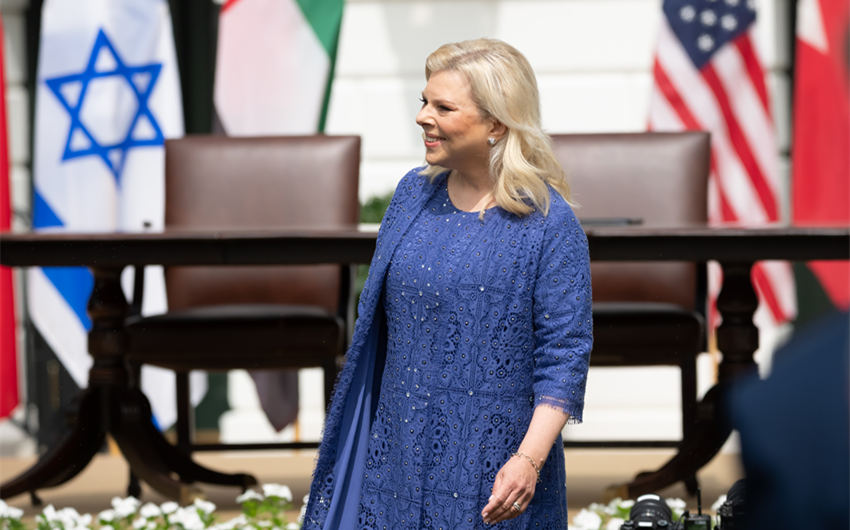
When people search for Sara Netanyahu, they are rarely looking for a simple biography. More often, they are trying to understand how the wife of Israel’s longest-serving prime minister became one of the country’s most discussed—and divisive—public figures. Sara Netanyahu is not an elected official, yet her name has appeared repeatedly in headlines involving politics, media disputes, legal cases, and public protests. To understand her role, you have to look at the intersection of personality, power, public perception, and a political era defined by deep division.
Who Is Sara Netanyahu?
Sara Netanyahu, born Sara Ben-Artzi, is the wife of Benjamin Netanyahu, Israel’s former prime minister. Over the course of his multiple terms in office, she has become one of the most visible political spouses in the country’s history. Israel does not have an official “first lady” role, but Sara Netanyahu has often functioned as a de facto first lady due to her constant presence at official events and her proximity to power.
What makes her stand out is not just visibility, but controversy. Unlike many political spouses who remain largely ceremonial, Sara Netanyahu has been portrayed—fairly or not—as someone whose influence extends beyond appearances and into decision-making spaces.
Early Life and Education
Sara Netanyahu was born in Kiryat Tiv’on, near Haifa, into a family with a strong academic background. Her father was a well-known educator and writer, and education played a central role in her upbringing.
She served in the Israel Defense Forces, working in a psycho-technical evaluation role connected to military intelligence. After her service, she pursued higher education, earning a bachelor’s degree in psychology from Tel Aviv University and later completing a master’s degree at the Hebrew University of Jerusalem.
Before entering public life as a political spouse, Sara Netanyahu worked as a psychologist, primarily with children. This professional background is often overlooked in public discussions but helps explain why she rejects the idea that she is merely a symbolic figure.
Marriage to Benjamin Netanyahu
Sara Netanyahu married Benjamin Netanyahu in 1991, long before he became one of Israel’s most dominant political leaders. As his political career expanded, so did her public exposure. With each term as prime minister, the scrutiny intensified—not only of Benjamin Netanyahu’s policies, but also of his inner circle and household.
Over time, the Netanyahu marriage itself became part of public discourse. Supporters often portray Sara as fiercely loyal and protective of her husband, while critics describe her as domineering or overly involved. Regardless of perspective, her presence alongside Israel’s most influential political figure has made her impossible to ignore.
Role as Israel’s First Lady in Practice
Israel does not define formal responsibilities for a prime minister’s spouse, which has created ambiguity around expectations. Sara Netanyahu has attended state dinners, diplomatic visits, memorial ceremonies, and official celebrations. In many countries, these appearances would be routine and largely unremarkable.
In Israel, however, her role has been interpreted through a political lens. Critics argue that she crosses invisible boundaries, while supporters claim she is unfairly targeted simply for being visible and assertive. The lack of formal rules means that every action is judged subjectively, often depending on political alignment.
Media Coverage and Public Image
Few political spouses in Israel have faced the level of media attention that Sara Netanyahu has endured. Coverage of her ranges from investigative reporting to tabloid-style commentary, and the tone often reflects broader attitudes toward her husband’s leadership.
Public incidents involving her—whether disputes with staff, appearances at events, or reactions during protests—frequently escalate into national debates. For some Israelis, she symbolizes excess and entitlement associated with long-term power. For others, she represents resilience in the face of relentless hostility.
The result is a deeply polarized image: admired, criticized, defended, and attacked, often simultaneously.
Legal Issues and Controversies
Sara Netanyahu’s reputation has been shaped significantly by legal controversies. The most well-known case involved allegations related to the misuse of public funds for catered meals at the prime minister’s residence. In 2019, she reached a plea agreement, admitting to a lesser offense, repaying funds, and paying a fine.
While the case did not involve prison time, it left a lasting mark on public perception. For critics, it reinforced claims of entitlement and lack of accountability. For supporters, it was seen as a minor administrative issue magnified for political reasons.
Beyond that case, Sara Netanyahu has been connected—through allegations and investigations—to other controversies related to intimidation claims and behavior toward public officials. It is important to distinguish between proven legal outcomes and ongoing allegations, as not all claims have resulted in convictions. Still, the accumulation of controversies has made her a constant fixture in legal and political reporting.
Alleged Influence on Israeli Politics
Perhaps the most controversial aspect of Sara Netanyahu’s public role is the question of influence. Over the years, media reports and political opponents have claimed that she interferes in appointments, advises on messaging, or pressures officials behind the scenes.
Supporters strongly dispute these claims, arguing that they rely on anonymous sources and sexist assumptions about powerful women. They point out that no formal evidence has proven she holds decision-making authority, and that proximity to power should not automatically be interpreted as control over it.
The truth likely exists in a gray area. Sara Netanyahu does not hold office, but as the spouse of a prime minister, her opinions inevitably carry weight in private conversations. Whether that constitutes improper influence or normal spousal involvement remains a matter of intense debate.
Family Life Under Constant Scrutiny
Sara Netanyahu is also a mother, and her family life has unfolded almost entirely under public observation. The Netanyahu children have received media attention of their own, sometimes for political statements and sometimes simply because of their family name.
Living under constant scrutiny has shaped how the family interacts with the public. Critics often see the family as emblematic of entrenched power, while supporters view them as targets of disproportionate hostility. For Sara Netanyahu, motherhood and marriage have never been separate from politics—they exist within it.
How She Is Viewed Internationally
Outside Israel, Sara Netanyahu is usually introduced simply as “the prime minister’s wife.” International media coverage tends to focus on controversies that translate easily across borders, such as legal cases, protests, or public spending issues.
Within Israel, however, the discussion is far more emotional and complex. She is not just a political spouse; she is a symbol through which supporters and opponents of Benjamin Netanyahu project their broader frustrations, loyalties, and fears about the country’s direction.