
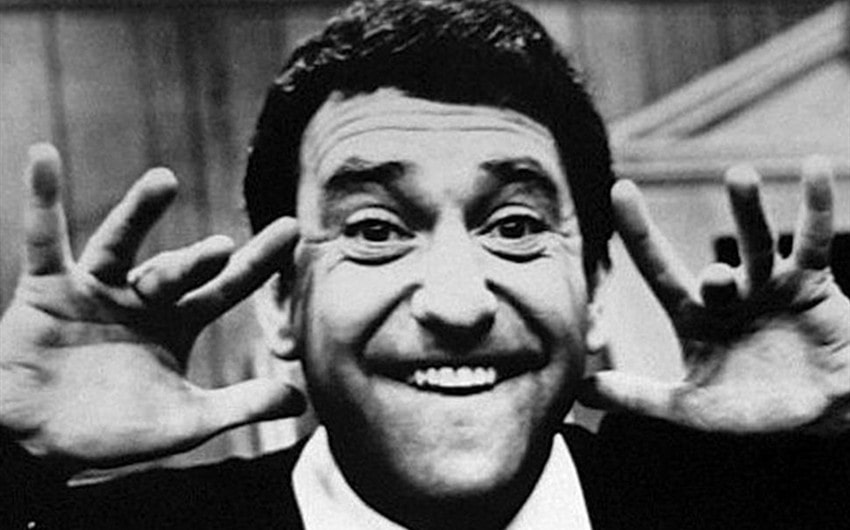
If you’re looking up Soupy Sales net worth at death, you’re probably trying to pin a real dollar figure to a career that seemed to last forever. The tricky part is that Soupy’s finances were never publicly documented in a single, reliable place, so the internet fills the gap with wildly different estimates. Still, by comparing what credible sources confirm about his long career with the most consistent estimate ranges online, we can land on a realistic ballpark without pretending it’s an audited number.
Estimated net worth at death (best-fit figure)
Estimated Soupy Sales net worth at death (2009): about $4 million to $5 million, with a broader “reasonable” range of $3 million to $6 million. This is not an official number, but it’s the most consistent estimate you’ll see repeated across multiple net worth trackers and biography-style sites. A handful of pages claim far higher totals (like $25 million), but those same pages often contain obvious factual errors about his career and death, which makes their money figure hard to trust.
Why Soupy Sales’ net worth is hard to confirm
Soupy Sales worked in an era when celebrity finances weren’t reported the way they are today. There were no social media “flex” moments, no podcast breakdowns of contract terms, and no public salary databases. Unless an estate goes through widely accessible filings (or a family publishes details), a precise net worth number is usually impossible to prove.
It also doesn’t help that Soupy’s career income likely came from many different lanes: local and network television, radio, records, live performances, guest appearances, and later-stage work in entertainment. Those revenue streams don’t show up neatly in public records, and older TV contracts didn’t always come with the kind of long-term residual structures people assume today.
Quick career refresher: who was Soupy Sales?
Soupy Sales (born Milton Supman) was a comedian, actor, and radio-TV personality best known for his children’s television series Lunch with Soupy Sales (later The Soupy Sales Show). The show became famous for rapid-fire slapstick and the pie-in-the-face gag that turned into his signature. Over the years, he also became a familiar face on TV game shows and talk appearances, which kept him working far beyond his peak era.
Soupy died on October 22, 2009, at age 83, with major obituary coverage noting he passed away in the Bronx, New York. His long working life is the main reason any net worth estimate, even conservative ones, tends to land in the millions.
Where Soupy Sales’ money likely came from
To understand his estimated wealth, it helps to stop thinking of him as “a kids’ show host” and start thinking of him as a full-time entertainer who stacked income sources for decades. Here are the biggest lanes that likely mattered financially.
1) Local and network television (the foundation)
Soupy’s strongest earning years were almost certainly tied to television. His show started locally and then expanded into broader markets, and that kind of success typically came with a combination of salary, sponsor relationships, and later syndication value. A host who could draw consistent ratings—especially in the post-war television boom—had real leverage, even when the show looked simple on screen.
It’s also worth remembering that “children’s TV” in the 1950s and 1960s wasn’t treated like a small niche. It was a daily habit in many homes. When you become part of that routine, you become valuable to stations and sponsors, and the money can be stronger than modern viewers expect.
2) Radio work and hosting (steady checks, long runway)
Soupy’s career included radio work as well as television. Radio rarely carries the same “celebrity pay” as prime-time TV, but it can provide stable income and frequent paid gigs. For entertainers who wanted longevity, radio also kept them visible between television opportunities.
This matters for net worth because long careers are often built on consistency more than a single jackpot. If you keep working year after year, you can build wealth even without blockbuster paydays.
3) Records and novelty releases (extra revenue you might not expect)
Soupy wasn’t only a TV personality. He also recorded music, including novelty releases tied to his comedic brand. Record deals and novelty hits could generate meaningful income at the time through sales and performance royalties. It likely wasn’t the biggest slice of his wealth, but it was another revenue stream that added up—especially during years when his TV visibility was high.
4) Game show appearances and panel work (a second career inside TV)
After his kids’ show era, Soupy became a familiar presence on game shows and syndicated television, including panel roles. That kind of work is often underrated financially. Game shows can be steady, repeatable income, and they keep a personality booked. A performer who is quick, funny, and reliable can make a comfortable living through recurring guest appearances and panel gigs.
Even when the per-episode fee isn’t massive, the volume can matter. Stack enough appearances across enough years and you get a long, reliable earnings curve.
5) Live performances, club dates, and touring
Many TV comedians also worked live: theaters, clubs, special events, and corporate bookings. These gigs can pay very well, especially for a recognizable name, and they also generate cash income that doesn’t always show up in public reporting.
Soupy’s brand of slapstick and quick banter also translated well to live settings. That kind of adaptability is part of why he stayed employable.
6) Later-career work and long-tail income
Soupy remained active in entertainment for decades, even into later life. That “long tail” matters for net worth because older entertainers often keep earning from a mix of appearances, licensing, and occasional roles. Even if a star isn’t at their peak, their name recognition still has monetary value.
However, this is also where people overestimate. Many fans assume classic TV stars automatically earn huge residuals forever. In reality, older contracts and changing distribution models can limit what performers receive years later. Long-tail income exists, but it doesn’t always equal modern streaming-era expectations.
Why estimates online are all over the place
If you’ve seen net worth numbers ranging from around $1–2 million to $25 million, you’re seeing a common internet problem: sites copy each other, publish template content, and sometimes don’t fact-check basics. When a page can’t even get the correct death date, cause of death, or major credits right, its net worth figure is not something you should treat as “confirmed.”
The most frequently repeated and internally consistent estimate across multiple pages puts Soupy in the $4–$5 million neighborhood at the time of his death. That’s why that figure is a reasonable best-fit estimate, even though it cannot be verified as official.
What could have lowered his net worth in later years?
Net worth isn’t just about what you earn. It’s also about what you spend, what you lose, and what life costs over time. For an entertainer who lived into his 80s, a few factors could have reduced what he ultimately left behind.
Healthcare and aging costs
Even with insurance, long-term health issues can be expensive—especially if someone has extended medical needs in later life. Obituary coverage noted Soupy had significant health problems before he died. Costs like treatment, assisted care, and end-of-life support can materially affect an estate.
Career peaks and valleys
Soupy’s career had major peaks, but entertainment is rarely a straight line. Some years are packed with work. Other years are quieter. If a person doesn’t invest carefully, quiet years can shrink wealth. And even smart investing doesn’t protect everyone equally from market swings across decades.
Older-era TV compensation realities
Many mid-century entertainers did not receive the same long-term participation deals that later generations negotiated. Some were paid well upfront but didn’t benefit as much from later distribution. That doesn’t mean Soupy wasn’t well paid—it just means it’s safer to estimate in the single-digit millions than to jump to a huge number without proof.
What his lifestyle and public profile suggest
Soupy wasn’t widely known for living an extreme, tabloid-rich lifestyle. That usually points toward a more conservative wealth profile: solid earnings over time, a comfortable life, and a meaningful estate, but not necessarily “mega-celebrity” money. He was famous, yes, but he wasn’t operating in the modern blockbuster economy where a single deal can be worth tens of millions.
That context supports the $4–$5 million estimate as a practical middle ground—large enough to reflect decades of steady work, but not inflated into fantasy.
So what is the best answer to “Soupy Sales net worth at death”?
The best answer is an estimate that matches both the reality of his career and the most consistent online reporting:
- Best-fit estimate: $4 million to $5 million
- Reasonable broader range: $3 million to $6 million
- Why not higher? High-end claims (like $25 million) often appear alongside incorrect biographical details, which weakens their credibility.
This is the kind of estimate that reads honest, stays realistic, and still gives you the clear number you came for.
What mattered more than the number: Soupy’s influence
Soupy Sales’ financial legacy is interesting, but his cultural legacy is bigger. He helped shape a style of TV comedy that later generations absorbed without even realizing it: fast improvisation, controlled chaos, and the idea that a host could be both the ringmaster and the punching bag. The pie-in-the-face gag wasn’t just a gimmick—it became a visual language that still shows up in comedy today.
And unlike many performers who burn bright and disappear, Soupy stayed part of the television ecosystem for decades. That’s why the net worth question exists at all. People don’t ask it about someone who had a short run. They ask it about someone whose work kept echoing.
Closing thought
There’s no official ledger that proves Soupy Sales’ exact net worth at death, but the most reasonable estimate is that he died worth around $4–$5 million. That figure fits the shape of his career: a huge early TV impact, decades of steady work across multiple formats, and a long life that likely included real costs as well as real earnings. In the end, his fortune was meaningful—but the real wealth was the fact that generations still remember him, still quote him, and still laugh at a pie to the face.
image source: https://forward.com/culture/127548/hang-on-soupy/